

The responsible management of resources has become a key element in improving business competitiveness, at a time when every action we take has a significant impact on results. Among these resources, energy occupies a prominent place as it directly impacts operating costs, conditions daily operations and influences the perception that customers and the market have of organizations.
For this reason, energy efficiency is no longer a secondary option, but an essential business planning tool. And it is not designed only for large companies. On the contrary: self-employed individuals and SMEs are those who can benefit most from adopting measures that allow them to reduce consumption, improve processes and access new avenues of public support.
Efficiency as part of business strategy
Improving energy efficiency is not a technical or solely environmental exercise, it is a business decision since for many small businesses, expenses associated with electricity consumption represent a significant part of the annual budget. Small variations in supply costs can mean significant differences in profitability, and this scenario means that every step towards improvement has a real and immediate impact.
In recent years, many Galician self-employed individuals and SMEs have initiated small transformations that allowed them to move towards more efficient models, from changing lighting, through updating air conditioning equipment, to incorporating monitoring solutions that make it possible to know exactly where, when and how energy is consumed. Many of these actions require moderate investments and can count on public aid specifically designed to facilitate this transition.
Efficiency is not just savings, it is also better organization, greater comfort in workspaces, more reliable equipment and greater consistency with environmental challenges.
Energy efficiency in practice: small actions, great results
We are not talking about large investments, but about intelligent and reasonable changes that can be applied in any sector such as:
1. Efficient lighting is the first step any business can take
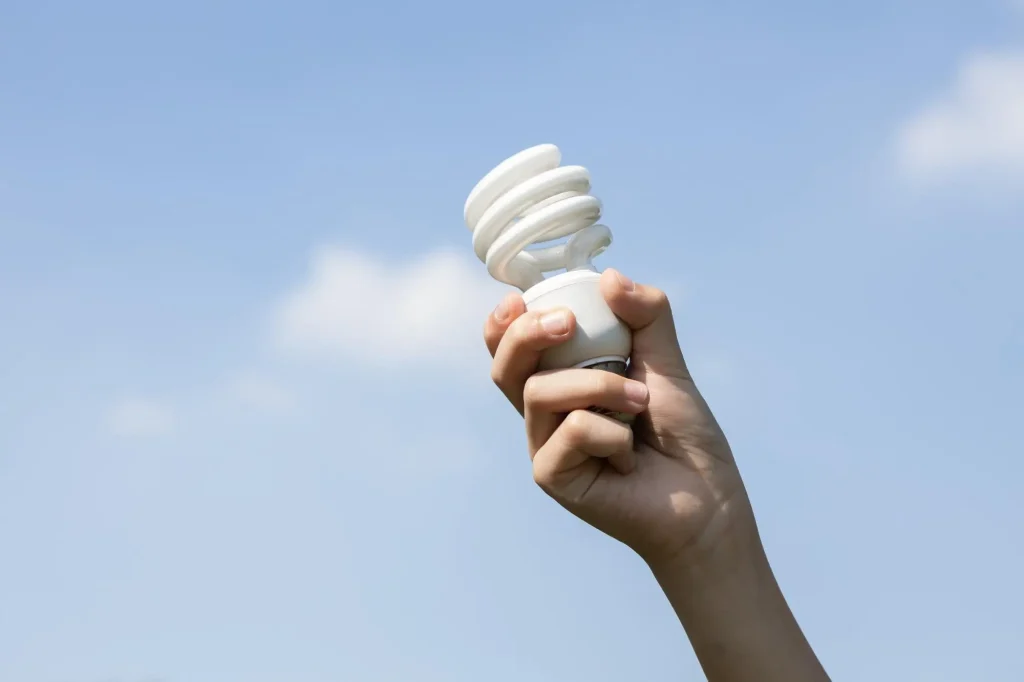
Replacing old lighting fixtures with LED represents up to 80% less consumption, longer lifespan, less maintenance and better light quality in the workspace or commercial premises.
A shoe store, a small office, a creative studio or a restaurant can reduce costs immediately just with this change.
2. More efficient air conditioning equipment
Air conditioning is one of the highest consumptions for SMEs. Many self-employed workers work in small premises where heating or air conditioning runs practically all day. Switching to more efficient systems (for example, high-efficiency heat pumps) can mean between 30% and 50% savings, better temperature control and a reduction in emissions.
An example is that of a creative studio located in a commercial ground floor in an inland municipality. The increase in working hours with artificial light and continuous use of air conditioning caused a high energy bill. The progressive replacement of lighting fixtures with LED systems and the renewal of an old air conditioning unit with a more efficient heat pump allowed sustained reduction of monthly expenses.
3. Process optimization: hidden energy
Some SMEs do not realize that their actual consumption is not so much what they see on the bill, but what is hidden in daily habits such as equipment left on outside working hours, underutilized machines that consume more than necessary, refrigeration systems without maintenance or lighting in unused areas.
For example, a small restaurant located in a coastal area. Refrigeration equipment and air conditioning represented a significant part of its annual energy consumption. After conducting an audit, it was detected that certain systems were running outside working hours and that lack of maintenance reduced efficiency. Reprogramming equipment, proper temperature control and renewal of an industrial refrigerator significantly improved the situation.
Small measures, such as installing timers, motion sensors or properly programming equipment, can make a big difference.
4. The importance of energy audits, also for SMEs
An energy audit is not a complex or expensive process, and it has a clear benefit: identifying where and how energy can be saved.
It is especially useful for workshops, shops, small industries, offices or hospitality. Often, the savings detected are so evident that they pay for themselves in a short time.
To clearly understand the impact that energy efficiency can have on a small business, it is enough to observe practical cases that are already part of everyday life. Self-employed individuals and SMEs have a leading role in this process, and energy efficiency is, without a doubt, one of their best allies.
Having personalized support, such as that from the Economic Office of Galicia, can make a difference in the success of implementation. Request free specialized advice and use the available resources to boost your business.


