

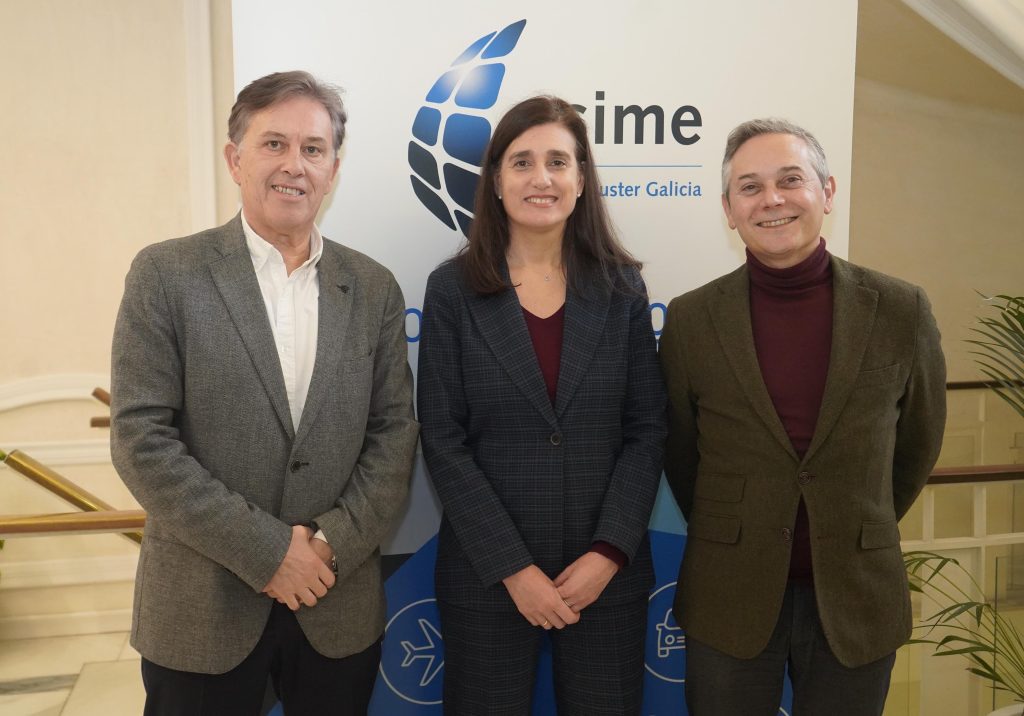
- Margarita Ardao, Director of Industrial Strategy and Business Premises, took part this morning in the presentation of the Observatory for the Construction, Metal Structures and Cladding Industry, promoted by Asime with the support of Igape
Vigo, 4 February 2026
The Director General of Industrial Strategy and Business Premises, Margarita Ardao, announced this morning the start of work on drawing up the Master Plan for the metalworking industry, one of the nine industrial sectors declared strategic by the Galician Government and “the backbone of the Galician industrial fabric”, as she emphasised.
Ardao took part in Vigo in the presentation of the Observatory for the construction, metal structures and cladding industry, promoted by the Galician Metal and Associated Technologies Industry Association (Asime) with the support of the Galician Institute for Economic Promotion (Igape), where she pointed out that this new tool “will be able to help identify sectoral needs by taking part not only in the drawing-up phase of the plan, but also in its subsequent monitoring and evaluation”.
The Director General recalled that the Galician Government is developing an industrial policy strategy aimed at facilitating the transformation process of Galician industries. Under this new industrial policy, 9 sectors have been declared strategic: metalworking, automotive, shipbuilding, forestry-wood, ICT industry, industrial logistics, food industry, textile and clothing sector, and construction industry. Each sector will have its own master plan as an instrument to improve competitiveness and generate quality employment.
At present, the master plans for the automotive and naval sectors have been approved, while the forestry-wood industry and the ICT industry submitted their preliminary drafts to the Xunta Council last January. In the case of metalworking, Ardao recalled that under the agreement signed with Asime, work will begin on a plan that will incorporate measures aimed at boosting modernisation and productivity through the digitalisation of processes and the introduction of new, more efficient and environmentally friendly production models.


